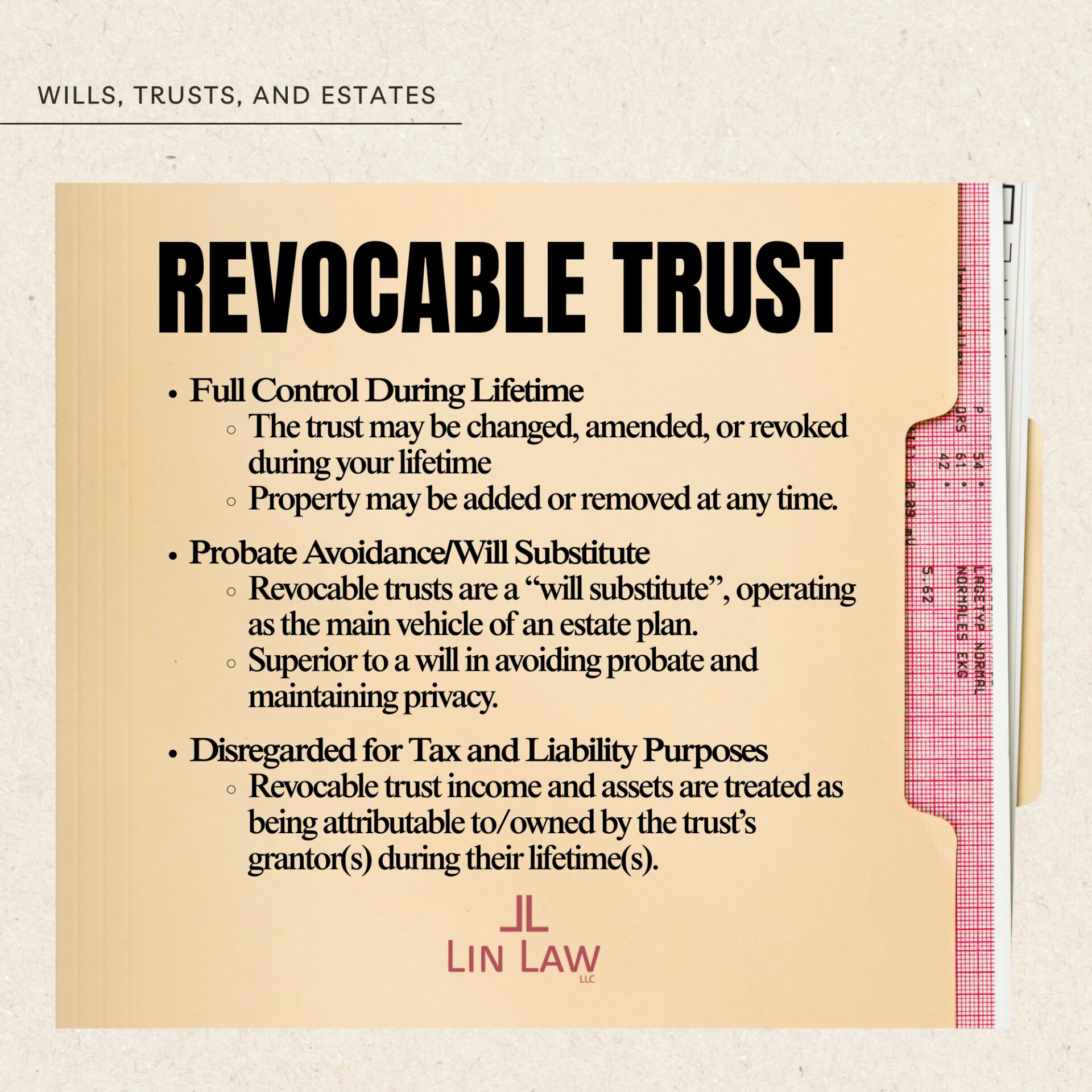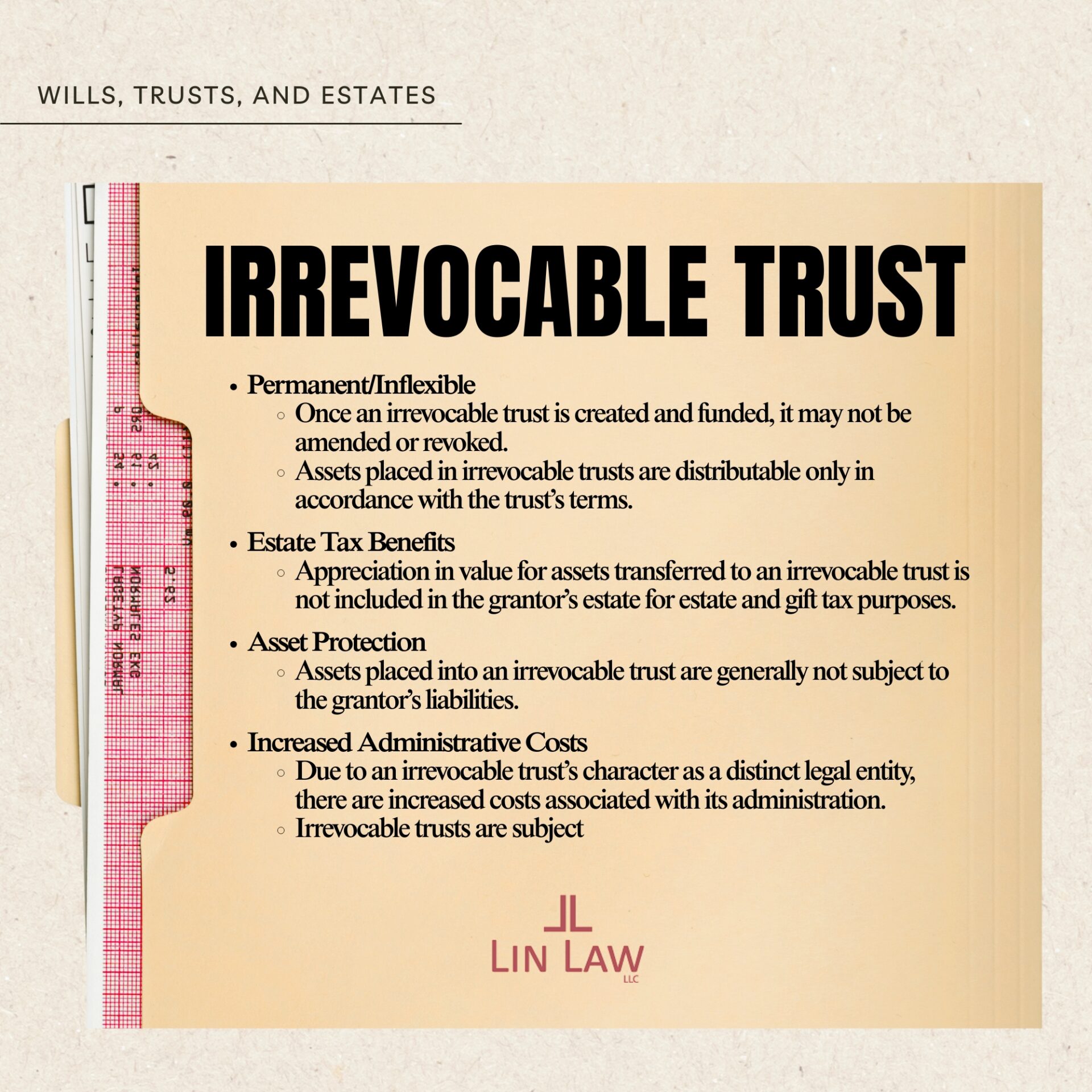



Do you know the difference between a revocable and irrevocable trust? Both allow you to avoid probate; however, they serve different purposes when it comes to privacy, protection, and control.
A revocable trust, also called “living” trust, offers greater flexibility, letting you edit at any time and still have control over your assets. However, having control does not mean it provides asset protection or any tax benefits.
On the other hand, an irrevocable trust is much stricter. Once you transfer your assets into it, they are now locked in the trust. Even if you lose some asset control, you gain greater asset protection from creditors and may receive tax advantages.
Before you choose, sit down and discuss your estate planning goals. What is most important to you: control during your lifetime or security in long-term protection?

An estate plan doesn’t only deal with allocating and distributing your wealth after you die. In an estate plan, you can:
1. Designate legal guardians for your minor children (and adult children under guardianship), upon your (and your spouse’s) death(s), to ensure your children are cared for by the loved one of your choosing. This can be done either in a will-based or a trust-based estate plan.
2. If you have personal belongings of special significance, whether family heirlooms or any other items of sentimental value, you can utilize a memorandum disposing of tangible personal property (in conjunction with a will or trust) to pass those items to specific loved ones, even if they are not your heirs.
3. Under powers of attorney for finances, health care, living wills, and authorizations for final disposition, you can empower loved ones to make financial, medical, and funeral/burial decisions on your behalf, and you can specify guidelines and/or your specific desires in certain situations.
4. You can protect your heirs by establishing separate asset protection trusts for their benefit, which can protect their inheritance from creditors and, if necessary, themselves (including if your heir has substance abuse, gambling, or other personal issues). This can be accomplished either using a will-based of trust-based estate plan.
5. You can protect yourself from increasingly more common financial scams targeting elderly individuals, by granting a trusted loved one the ability to supervise and assist with managing your financial affairs in a power of attorney for finances. Granting supervisory authority to a loved one is not bulletproof, but it does lessen the chance that a financial scam persists unchecked.
Your legacy is more than just your wealth, it is how your loved ones remember you and the impact you have on their lives. Use an estate plan to protect your legacy.


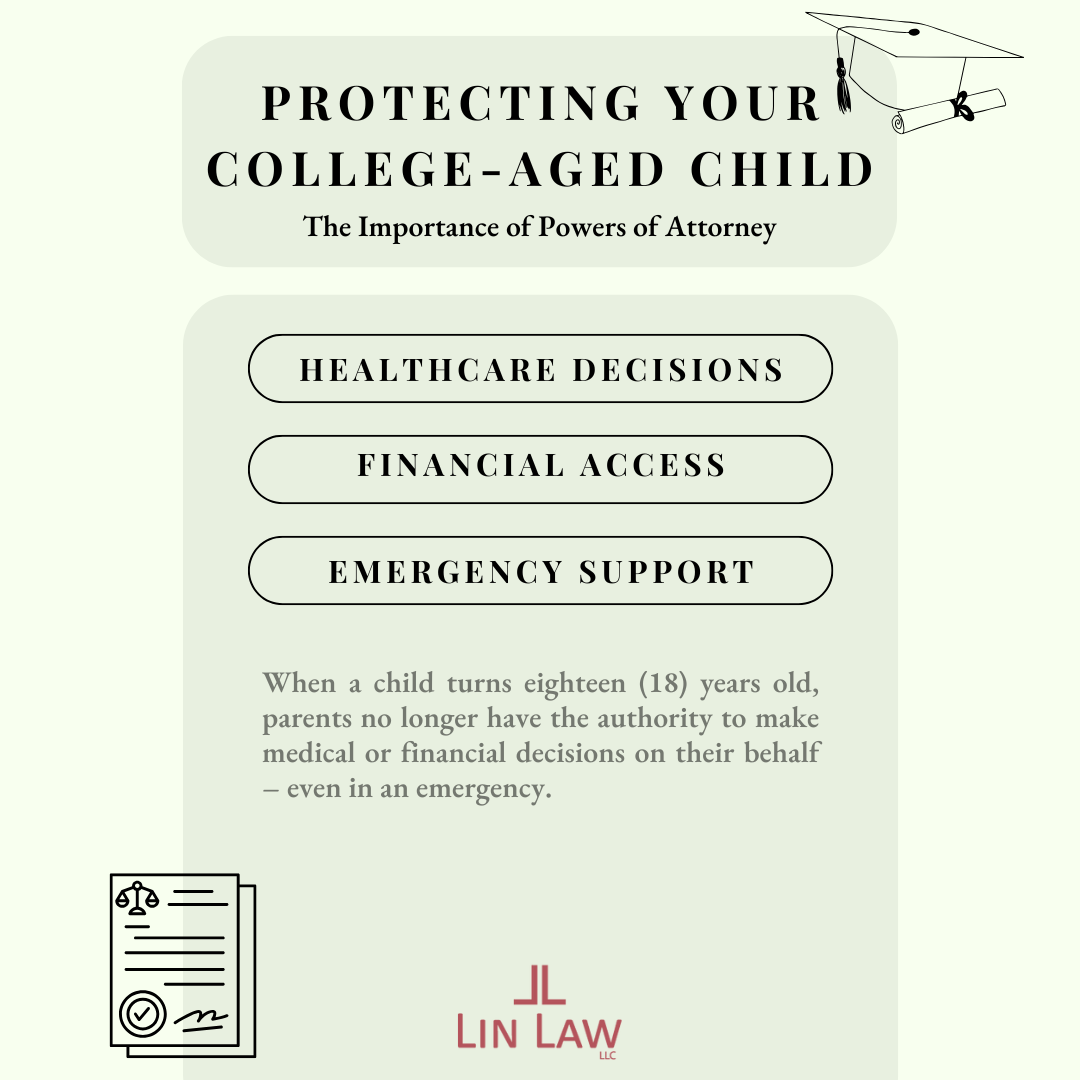
With high school graduations just around the corner, it’s a great time of year to take stock of just how much changes when our children turn eighteen. Whether you have a child preparing to head off to college for the first time, enter the workforce, or coming home for the summer, they are considered adults upon turning eighteen years of age. As their parents, you are no longer able to access or assist with their medical or financial decisions without the proper documents in place. A Healthcare Power of Attorney (and HIPPAA release) and Durable Power of Attorney allows your child to legally appoint you as their health care and financial agents. This enables you to step in on their behalf – whether it’s to speak with doctors about medical decisions/appointments or assisting with tuition payments, banking and other personal financial matters. Having these documents executed can make all the difference when it matters most, providing the ability to act quickly in an emergency situation and offering peace of mind especially when your child is away at school and/or traveling.


As one would expect, many parents and/or grandparents assume that their children and/or grandchildren will handle inheritance matters amicably when it comes time to receive their share. However, after years of experience in the estate planning industry, it has become clear that this is rarely the case. A different side of a person often comes out when inheritance is involved which is why these types of conflicts within families are unfortunately extremely common. Without proper planning practices in place, disputes over inheritance amounts, real estate, or loans can damage family relationships beyond repair. Although the ability to recognize potential problems is already a significant part of its solution so, here’s our recommendations you should consider to help ensure smooth transitions:

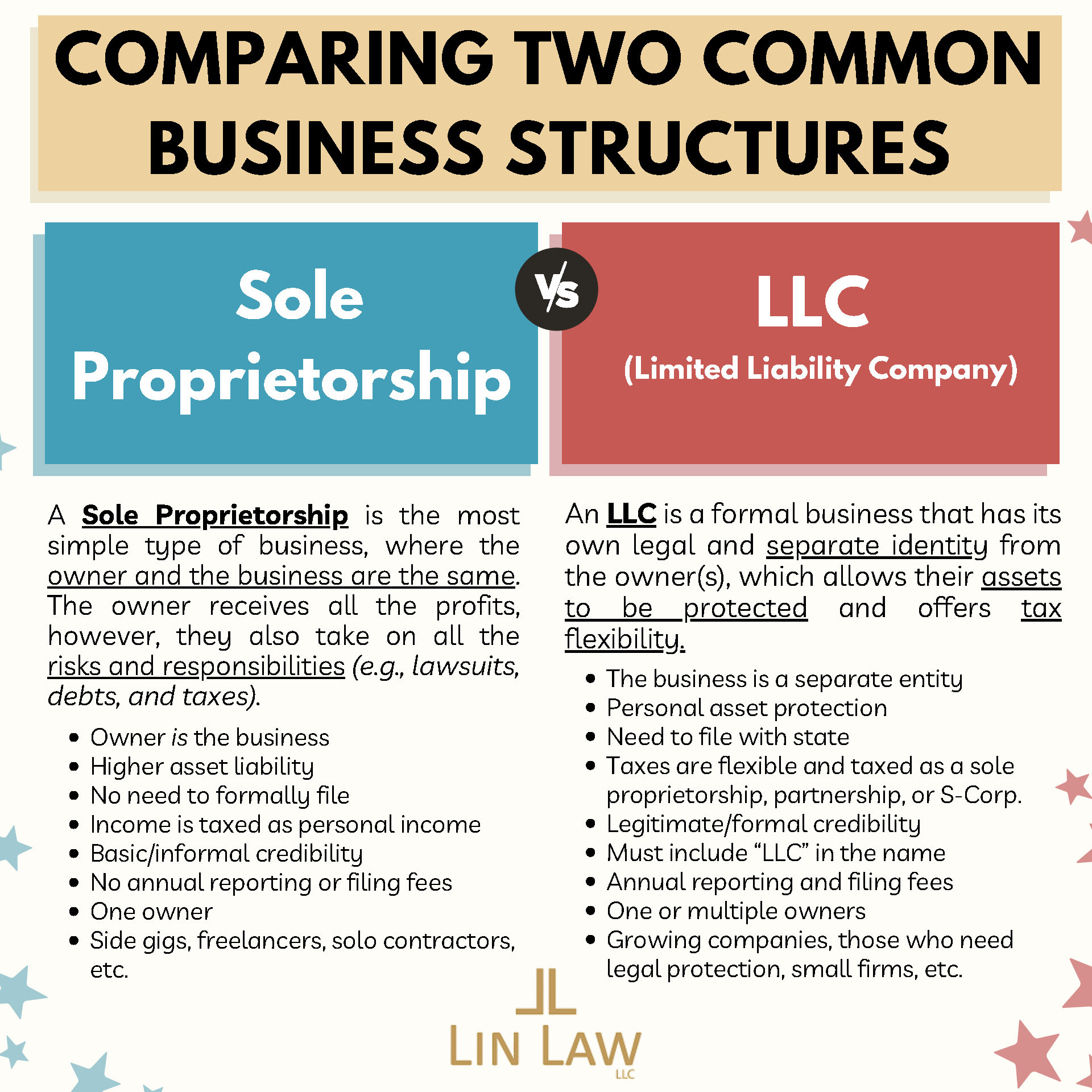
One of the major developments in estate planning and corporate law was the passage of the Corporate Transparency Act (CTA), which went into effect on January 1, 2024. The CTA impacted almost all LLCs, corporations, limited partnerships, and other closely held business entities by creating a requirement that a “Beneficial Ownership Information Report”, or “BOIR”, be filed with the Financial Crimes Enforcement Network (FinCEN), a federal bureau within the United States Department of the Treasury. Subject to a few limited exceptions, this reporting requirement applies to all business entities with less than 20 full time employees. In the BOIR, entities and their owners were required to provide personal identifying information on all individuals that exercise substantial control over the entity, as well as all individuals that own or control at least 25% of the entity’s ownership interests. The CTA’s overall purpose is to prevent the use of companies, such as corporations, limited liability companies, and various forms of limited partnerships, to obscure illicit activities and to increase business operations ethics and transparency. In Furtherance of these objectives, the CTA requires businesses, subject to a few exceptions, to disclose information regarding individuals who own at least twenty-five percent (25%) or exercise majority control over the company must report their information.
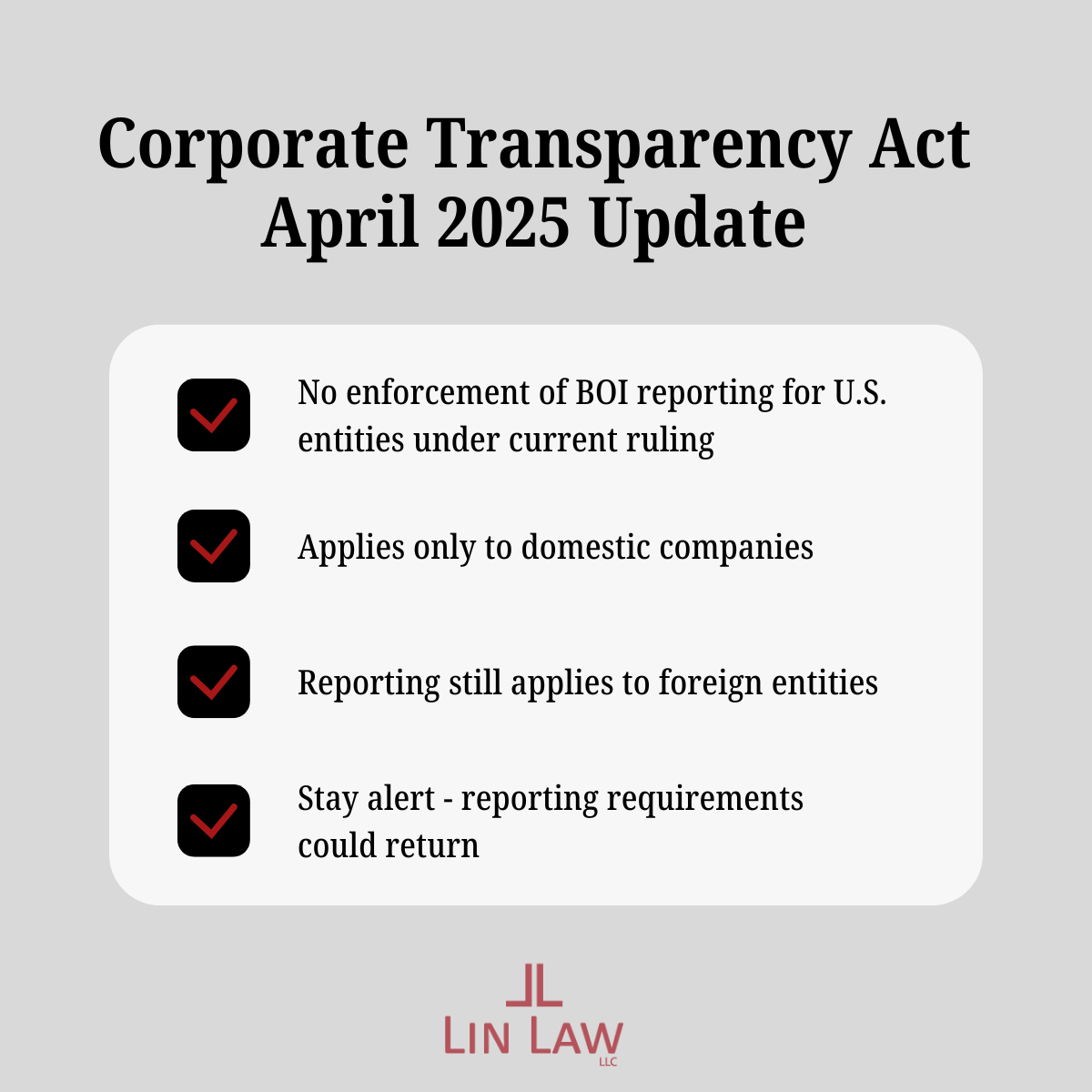
As of the present date, there are two cases challenging the constitutionality of the CTA. Under both cases (Texas Top Cop Shop v. Garland and Smith v. U.S. Department of the Treasury), nationwide injunctions were enacted preventing enforcement of the CTA. For the time being, reporting companies are not required to file BOIRs with FinCEN. However, the injunctions have been previously lifted only to be subsequently re-enacted as they have made their way to the U.S. Supreme Court. On December 3, 2024, the U.S. District Court for the E.D. Texas in Texas Cop Shop enacted a nationwide injunction that temporarily blocked enforcement of the CTA. A second injunction soon followed in Smith. Then, on December 23, 2024, the nationwide injunction was lifted when it was overturned by the Fifth Circuit Court of Appeals. Scrambling, and in recognition that many reporting companies stopped filing their BOIR, FinCEN extended the deadline to file an initial BOIR to January 13, 2025. Before the January 13 deadline, the U.S. District Court for the E.D. Texas issued another nationwide injunction in Smith. While the nationwide injunction remains in place under Smith, the U.S. Supreme Court has indicated a willingness to uphold the validity of the CTA when they lifted the nationwide injunction enacted in Texas Top Cop Shop on January 23, 2025.
It is critical to ensure you are compliant with the CTA reporting requirements. If enforcement of the CTA resumes, non-compliant companies could face substantial penalties, including fines of five-hundred dollars ($500) per day and/or possible additional penalties and criminal charges for intentional violations. Going forward, if the CTA is upheld, FinCEN will likely extend initial reporting deadlines for any entities that have not yet filed a BOIR. This was the case following a temporary lifting of the nationwide injunctions on December 23, 2024, when the initial reporting deadline was extended to January 13, 2025. Entities formed after January 1, 2025, must file their initial BOI report within thirty (30) days of their formation. In order to ensure compliance, if necessary, it is also critical to monitor the progress of these cases as they proceed to the U.S. Supreme Court on their merits. If ultimately upheld, new deadlines for compliance will likely be imposed.
Lastly, if the CTA is ultimately upheld, it is important to keep in mind that the initial BOIR filing is only the first requirement under the CTA. Each instance where the information reported for a beneficial owner changes (including, but not limited to, if the reporting company’s address or name changes, if ownership composition of the reporting company changes, or if an owner’s name or address changes), then a subsequent BOIR must be reported within 30 days of such change.
Your legacy isn’t meant to be a game for your family to play. In the event of your passing, an estate plan ensures your affairs are organized and tailored to your wishes. Many people avoid planning their estates, leaving the responsibility to the state. Without a designated plan, the law will decide for you—or worse, it could lead to family disputes over who gets what. In most cases, the court’s decisions may not align with your intentions. With the new year already underway, take the opportunity to get ahead and start planning your inheritance. After all, no one knows better than you what you want for your legacy and loved ones!

We want to thank The Business News and Rachel Kroeger for the wonderful article featuring our own Founding Attorney and Managing Member, Evan Y. Lin, and our firm, Lin Law LLC. Check out the article with the link below: