
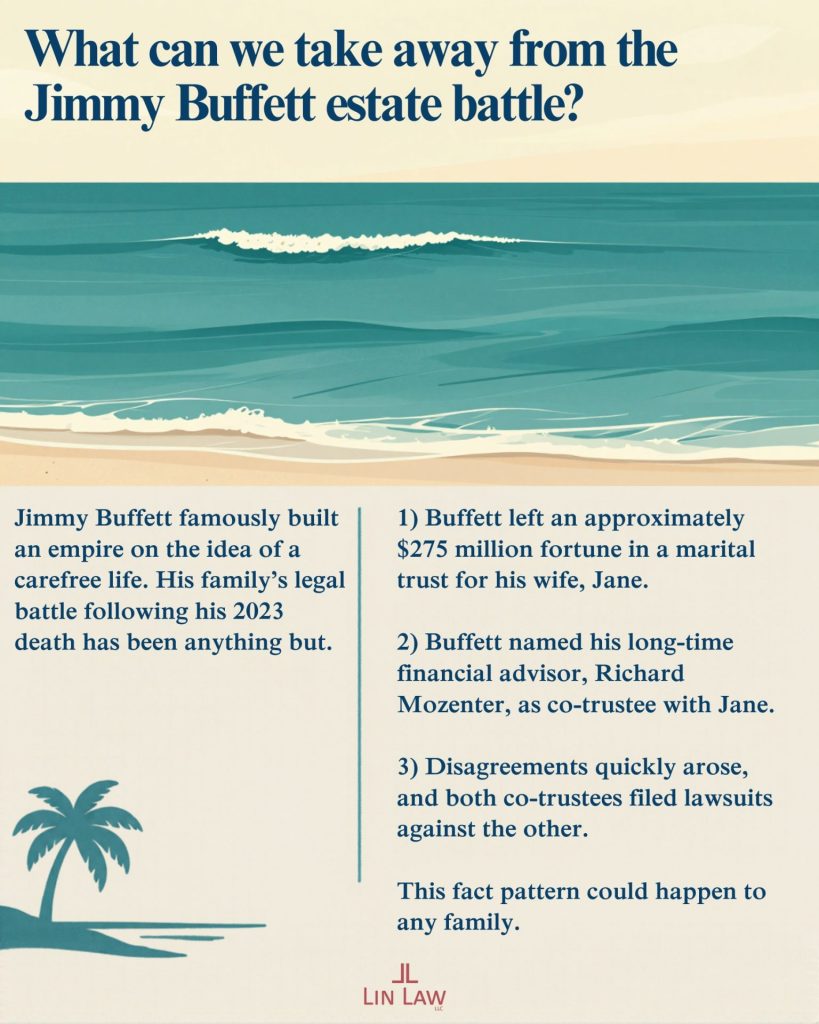
Jimmy Buffett famously built an empire on the idea of a carefree life. However, since the legendary singer’s passing in 2023, his family has been involved in a legal battle for his estate that has been anything but carefree.
When Jimmy Buffett died, he appointed his wife, Jane, and long-time financial advisor, Richard Mozenter, as co-trustees in charge of managing his fortune. The arrangement isn’t uncommon and is often done with noble goals in mind. Often, those goals are achieved. But not always.
Within a year of Buffett’s death, the co-trustees were already at odds with each other. They disagreed over issues like investment allocation, the level of support necessary to maintain Jane’s standard of living, trustee compensation, and the appropriate degree of beneficiaries’ access to financial information. These disagreements can arise in any family.
The dispute escalated. Both sides filed lawsuits accusing the other of breaching their duties as trustee. A trial is scheduled for January of 2027.
So, what can we take away from the Buffett estate battle?
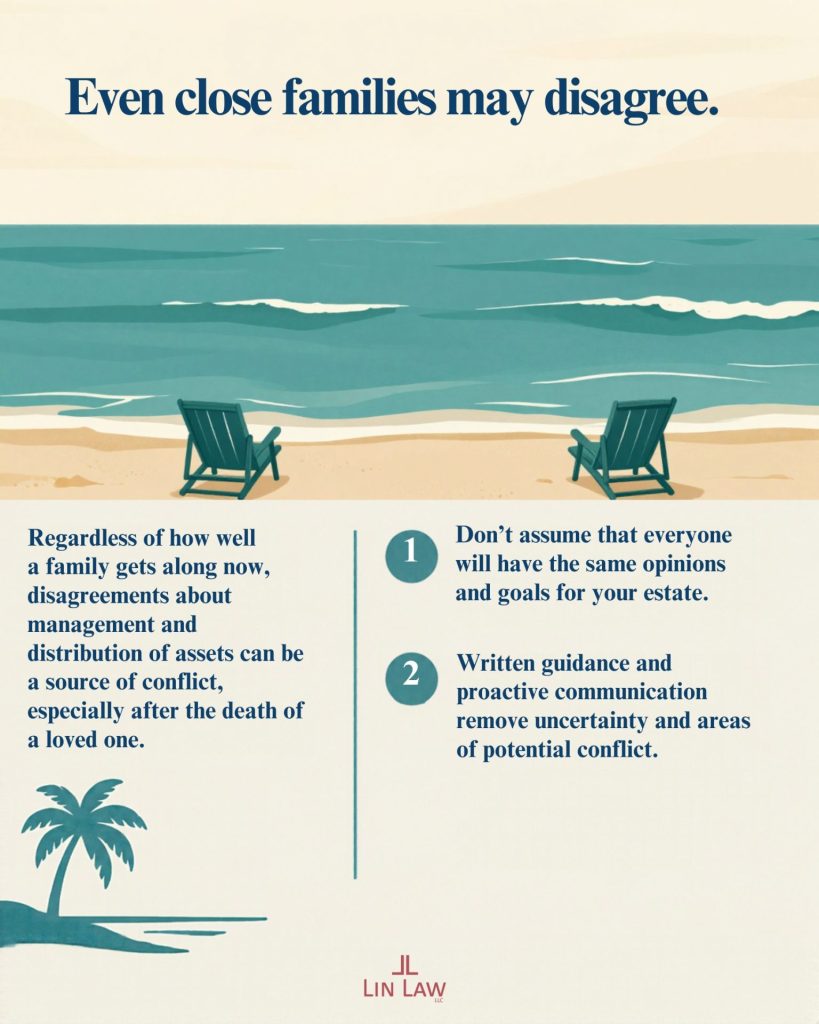
1) Even close families may disagree on finances. No matter how well your family gets along now, disagreements about management and distribution of assets can be a source of conflict, especially after a parent or spouse’s death.
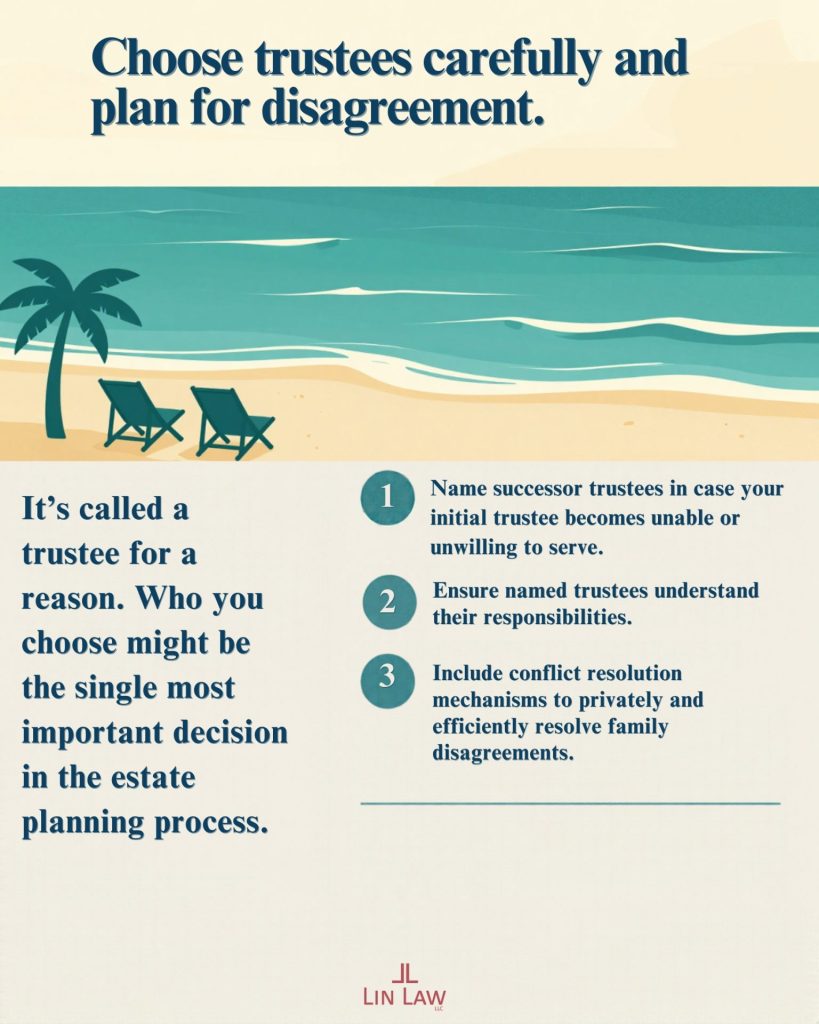
2) Choose your trustees carefully and provide conflict resolution mechanisms. A trust’s manager is called a trustee for a reason. Who you choose might be the single most important decision in the estate planning process. When it comes to co-trustees, sometimes even reasonable minds disagree. Choose your trustees carefully and consider a conflict resolution method to diffuse contentious situations before they escalate.
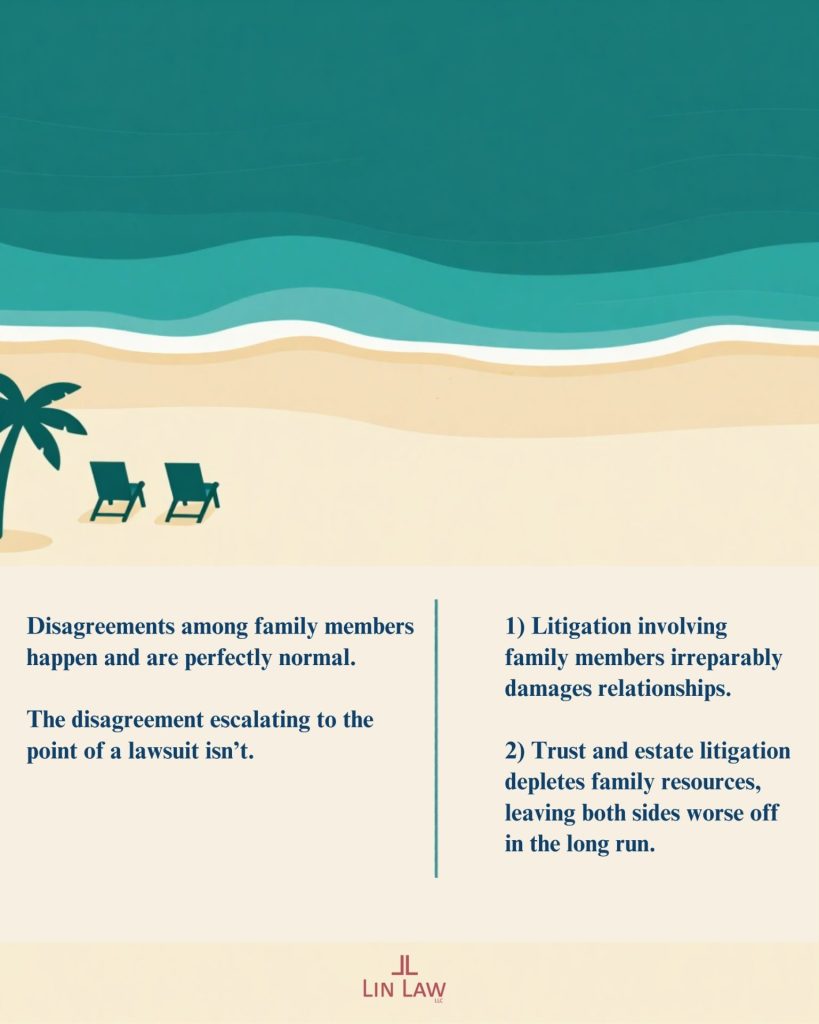
3) When disputes between family members end up in court, no one wins. Disagreements among family members happen and are perfectly normal. A family disagreement ending up in court is not. Trust and estate litigation depletes trust resources and often leaves both sides worse off in the long run.
Your plan should consider not just who gets what, but who manages it and how conflicts will be resolved.