
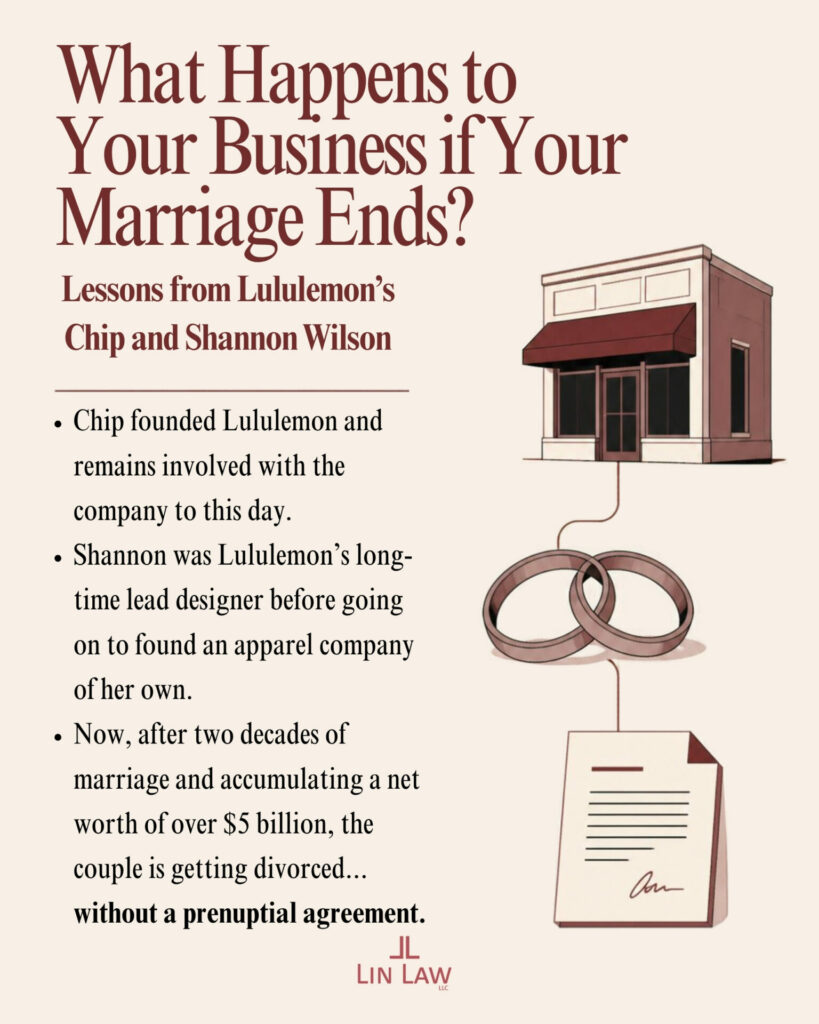
The divorce of Lululemon founder Chip Wilson and his wife Shannon “Summer” Wilson comes with an unfortunate complication. The Wilsons had closely connected personal and professional lives. Both Chip, Lululemon’s founder and CEO until 2005, and Shannon, Lululemon’s lead designer for several years, were directly involved in the company’s operations. Now, after two decades, the couple is getting divorced… without a prenuptial agreement.
This story is a good reminder to consider: what happens to your business if your marriage ends?
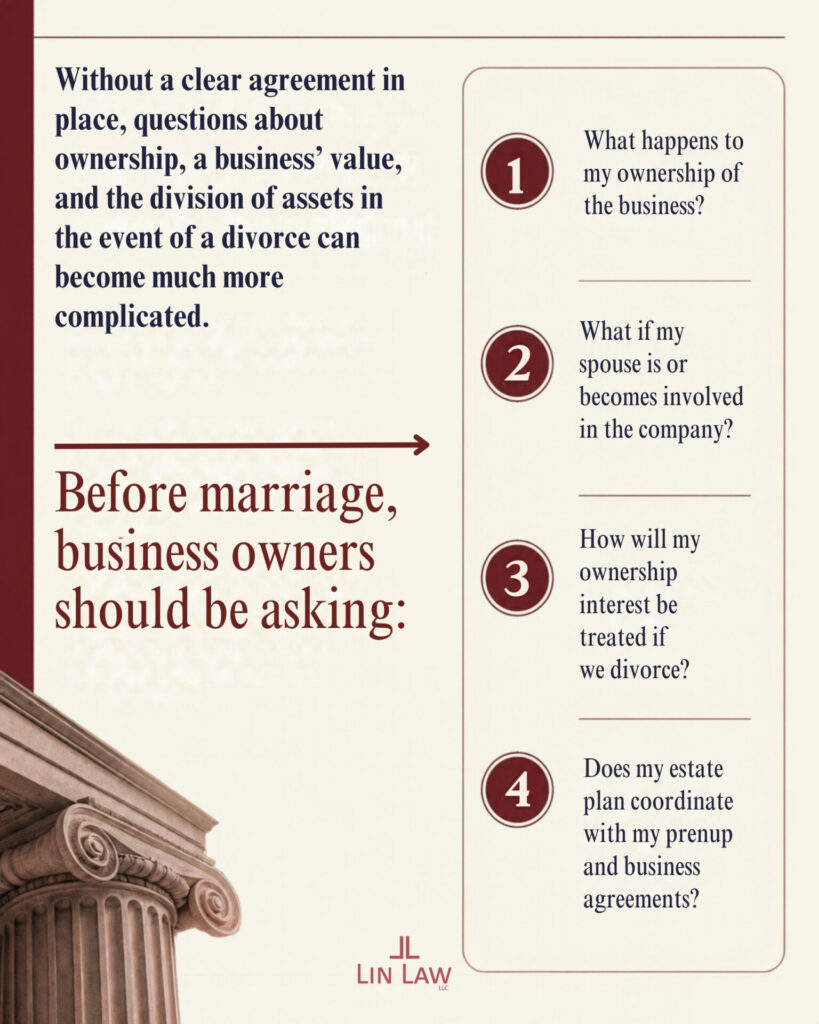
For entrepreneurs and business owners, marriage can have significant implications for business ownership, wealth transfer, and estate planning. The same is true in the event of a divorce. Without a clear agreement in place, questions about ownership, a business’ value, a spouse’s contributions to the business, and the division of assets can become much more complicated.
Before marriage, business owners should be asking:
- What happens to my ownership of the business?
- What if my spouse is or becomes involved in the company?
- How will my ownership interest be treated if we divorce?
- Are my estate and business succession plans coordinated with my prenup and business agreements?
These concerns apply whether your business is worth $5 million or $50,000. Economic value is one thing, but what about ownership, management, control, and liquidity?
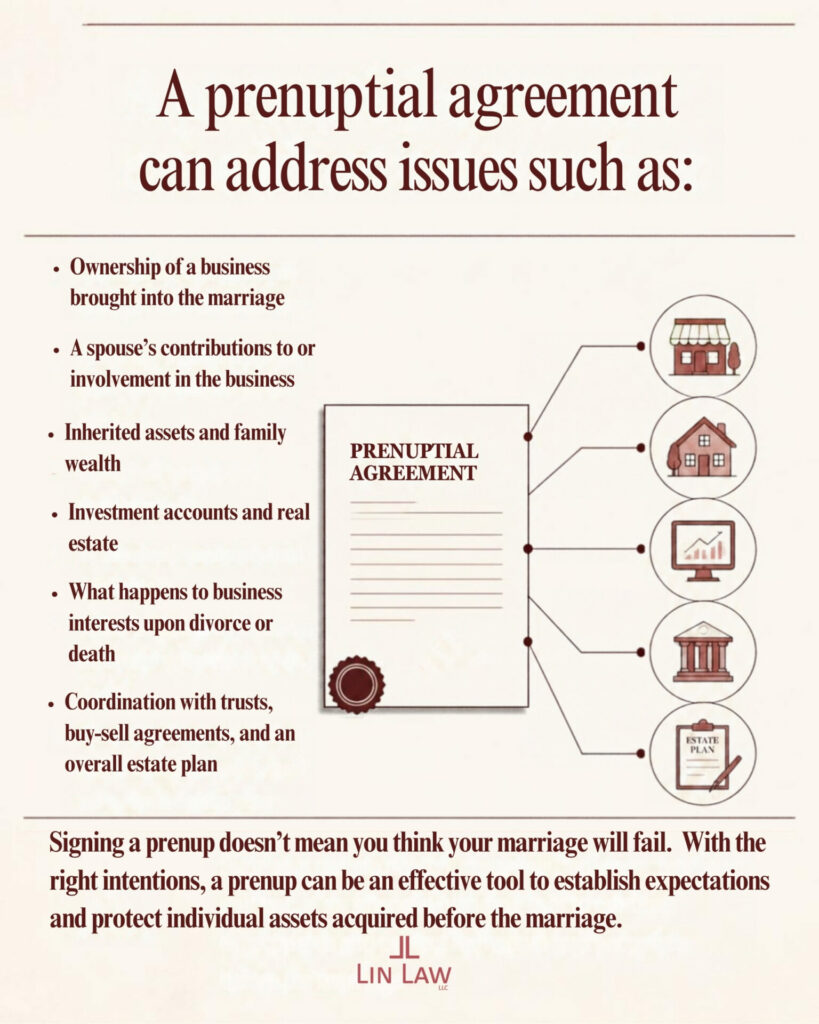
A prenuptial agreement can address issues such as:
- Ownership of a business brought into the marriage
- A spouse’s contributions to or involvement in the business
- Inherited assets and family wealth
- Investment accounts and real estate
- What happens to business interests upon divorce or death
- Coordination with trusts, buy-sell agreements, and an overall estate plan
Signing a prenup doesn’t necessarily mean you think your marriage will fail. If both spouses share positive intentions, a prenup can be an effective tool to establish expectations and treat both parties fairly.