
When you think about your estate, what comes to mind? There’s a good chance your home, bank accounts, investments, jewelry, vehicles, and other personal property came to mind. But what about your digital footprint?
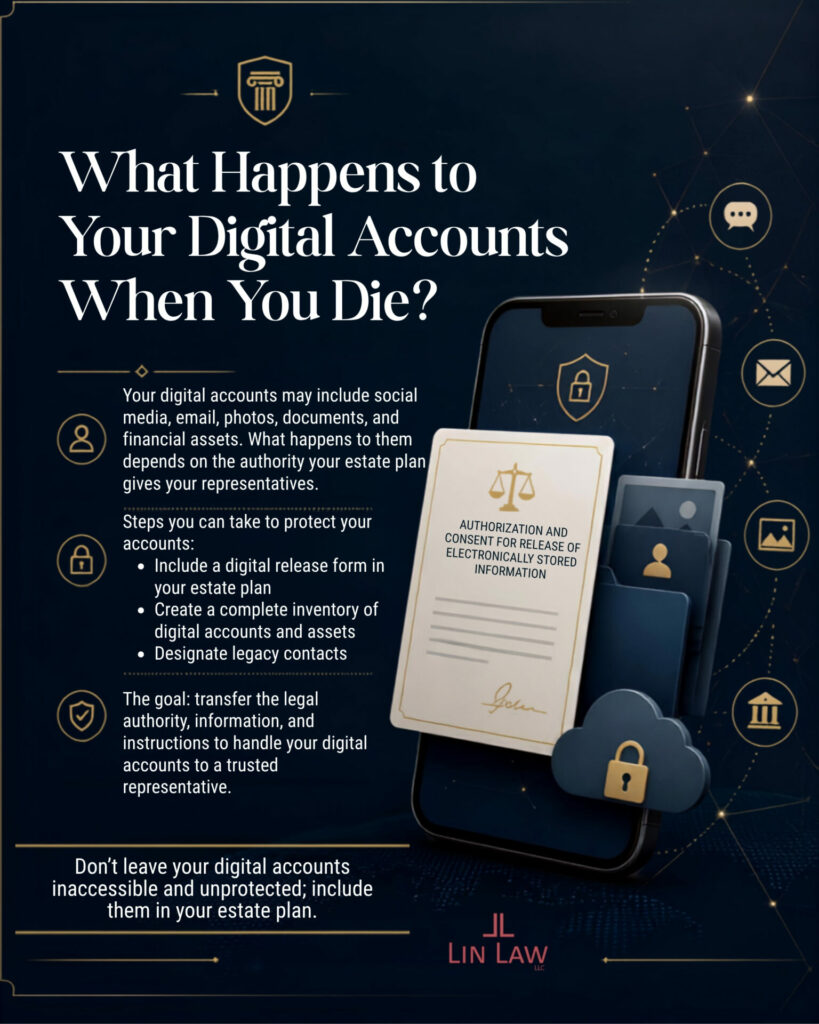
Your digital life may include social media accounts, email, photos and documents, and financial assets. In an increasingly digitalized world, having accounts and sensitive documents with digital-only access is common. What happens to those accounts after you die depends on the type of account, the provider’s policies, and the legal authority your estate plan gives to your representative. Digital assets and accounts require special consideration in your estate plan. Often these accounts are not actually owned by the user. Instead, the ability to use and access these accounts is licensed, and the ability to obtain data stored on them is subject to a user agreement.
An estate plan can include an Authorization and Consent for Release of Electronically Stored Information, a document which gives your representative legal authority to obtain certain electronic records during estate administration. This document can be especially important when family members need information but are not listed as legacy contacts.
Some other steps to protect online assets and information include creating a complete inventory of online accounts, and designating legacy contacts where available.
Planning for your digital accounts also gives you the opportunity to decide which accounts and information you want (and don’t want) others to access.
The goal is to transfer the legal authority, information, and instructions for your digital accounts to your representatives. A proper plan will avoid leaving your accounts unprotected and inaccessible to those responsible for settling your estate.
Your digital accounts are also part of your legacy. Don’t risk losing important files, photos, and memories; include them in your estate plan.