
Probate avoidance is one of the top reasons our clients cite when creating an estate plan. But what is probate? Why do people talk about it like it’s the plague? And if it’s so bad, how can it be avoided?
When someone dies, so does the only person with authority to control their assets. That’s where probate comes in. Probate is nothing more than court-supervised collection of a deceased person’s assets, paying off their taxes, debts, and liabilities, and distributing whatever’s left to the appropriate persons. Doesn’t sound so evil to me.
While probate might not be inherently bad, it takes several months at a minimum. There’s a mandatory waiting period at the outset. This allows persons time to object to the Will and who the personal representative will be. During this time, all assets are frozen. After that, there’s another mandatory waiting period to allow creditors time to file claims. And depending on the size and complexity of the estate, probate can take even longer.
Also, probate (like any other court case) is a public process. All documents filed in probate, including Wills and the inventory of assets, are accessible by anyone. Including creditors, disinherited relatives, curious neighbors, and scammers.
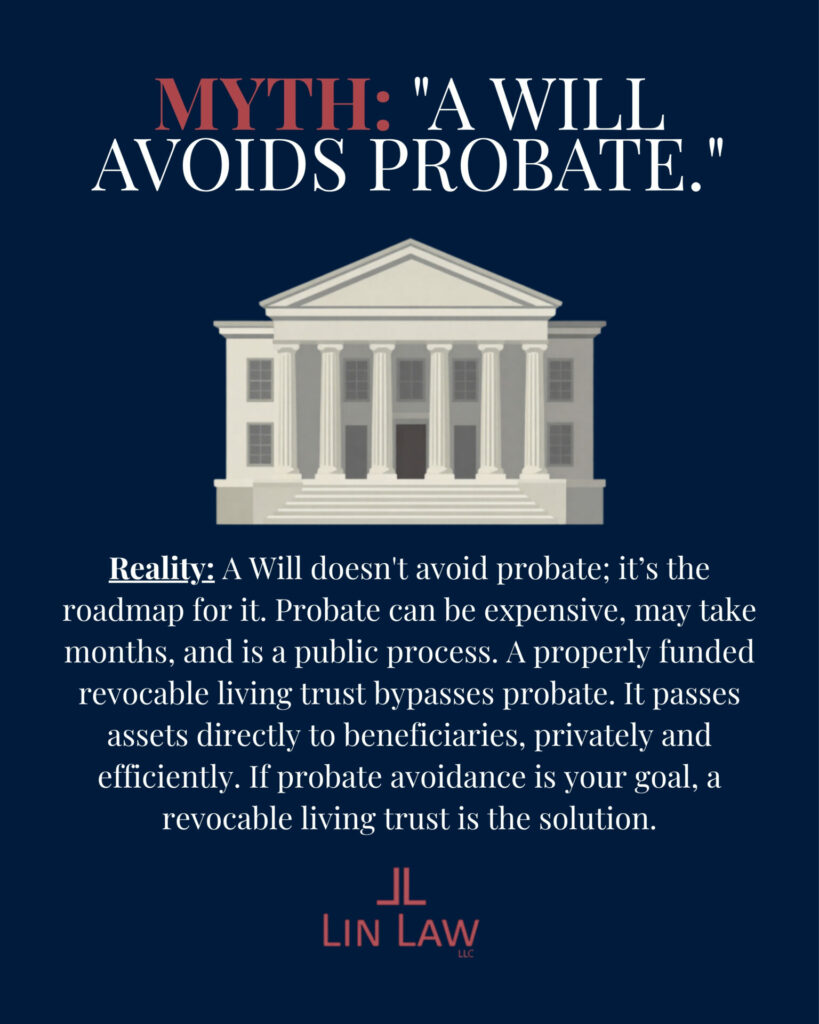
A common misconception is that a Will allows your family to avoid probate when you die. But having a Will doesn’t bypass the probate process, it’s the roadmap for it. A Will designates who’s in charge, and dictates how, in what manner, and to whom assets are distributed.
If avoiding probate is a goal, a properly funded revocable living trust is the most effective and comprehensive solution. Unlike a person, a trust can’t die; it simply distributes assets to new beneficiaries after its initial one dies. Unlike in probate there’s no initial waiting period, so assets can almost immediately be accessed to pay bills and support dependents. And because trust administration occurs outside the courtroom, financial and estate details remain private.
If privacy, efficiency, and probate avoidance are your goals, consider creating a revocable living trust personalized to your priorities, assets, and family circumstances.