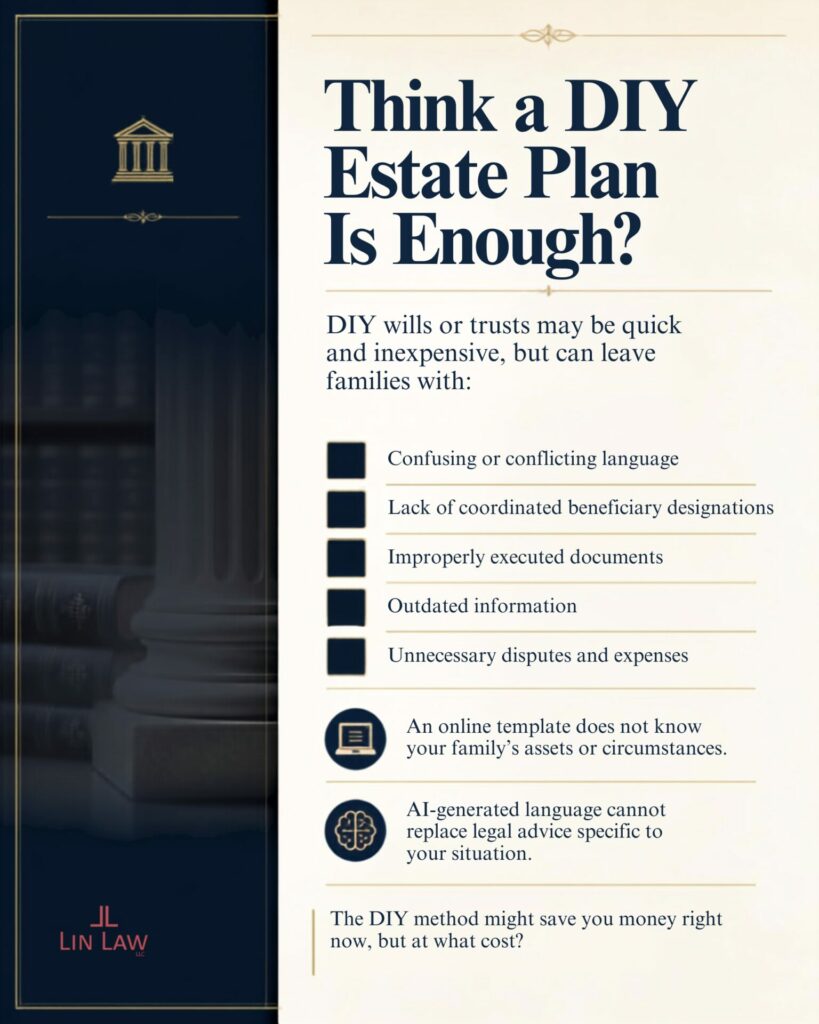
Think a DIY estate plan is enough?
You found a template online. Maybe you used AI to create your documents or perform research. It was quick, inexpensive, and seemed easy enough. But will a DIY estate plan work the way you want when your family needs it most?
An estate plan, regardless of how it’s created, should be: (1) in the proper form; (2) goal-oriented; and (3) contain substance consistent with your goals.
In order to be valid, estate planning documents must be in the proper form. They must be properly prepared, executed, and consistent with your other estate planning documents. They should also clearly and consistently communicate your wishes.
Form and validity aside, a properly drafted estate plan must have your goals in mind. Unless you tell it, an online template doesn’t know your family, your assets, or your life circumstances. And it doesn’t always ask. Even when it does ask, some things just can’t be fully explained by auto-filling a template or questionnaire.
Some pitfalls with DIY estate plans can include:
- Placing too many or too few restrictions on access to and management of property;
- Failing to recognize and minimize areas of potential future conflict; and
- Missed opportunities for tax or administrative savings.
These may result in unforeseen consequences, leaving your family dealing with problems you never intended.
A DIY estate plan could work just fine, and certainly might be less expensive than professional guidance. But it could also create unanticipated problems. If not done correctly, those savings now might end up costing your family much more down the road… financially or, worse, at the expense of relationships.
If you are relying on a DIY estate plan, it might be time to take another look.